|
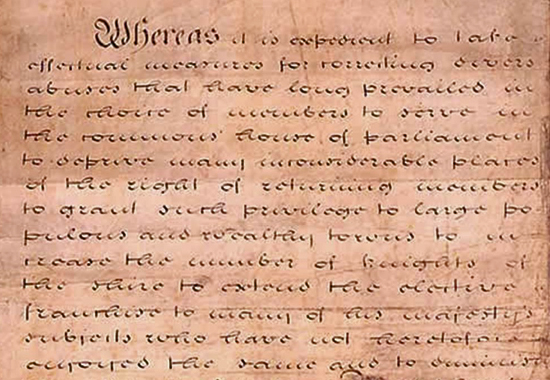
THE GREAT REFORM ACT OF 1832
Reform Act 1832
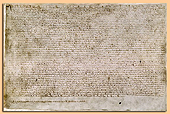
Go here for
the
 Reform Act of 1832 - The
Original Document
Reform Act of 1832 - The
Original Document
Go here for
the
Reform Act of 1832 -
The Transcript
The Reform Act of 1832 is also called the
Reform Bill of 1832.
Another name for it is the
Great Reform Act because it was
the first of several reforms concerning the same topic.
The Second Reform Act was passed in
1867.
The Third Reform Act was passed in 1884.
What Was the Reform
Act of 1832 all About?
The right to vote and the fair number of representatives in the
House of Commons in the British Parliament.
What Was the
Background of the Reform Act of 1832?
Back in the days, not many people had the right to vote. By the 18th
century, many people thought this was completely outdated, that all
men should be given the right to vote, and that it was time for
parliamentary reforms.
Another point was that industrial
developments brought about a change of the distribution of the
population. Before, people lived all over the places, more or less
evenly spread. Now, the cities grew like mad.
But the laws didn't grow with the
cities. So it happened that some large cities like Leeds,
Birmingham, or Manchester didn't have a single representative.
Whereas other deserted places, also called rotten boroughs,
had representatives but almost zero population. Such was the case
with Dunwich in Suffolk, who had two representatives and a
population of 32.
Governmental officials dragged their feet but
had to take the
French Revolution as an example of what could happen to
a stubborn administration. The Reform Act became official law on June 4, 1832.
Who Governed Britain
at the Time?
Lord Charles Grey, aka Earl Grey, the leader of the Whig
party, was Britain's prime minister from 1830 to 1834. He was the main man behind
the Reform Act of 1832.
William IV was king of Great Britain and Ireland
from 1830 to 1837. He
was against parliamentary reform because it meant more power for the
people and less power for the crown.
And here are the maps for the Reform Act of 1832
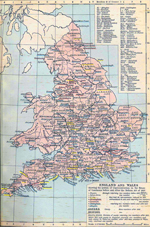
1832
England and Wales
Click
map to enlarge
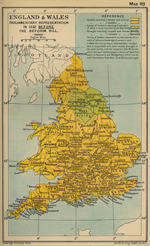
1832
England and Wales BEFORE Reform Bill
Click map to enlarge
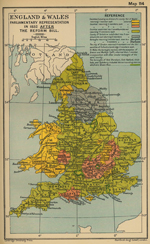
1832
England and Wales AFTER Reform Bill
Click map to enlarge
More History
|