|

 Explorers, Scientists &
Inventors
Explorers, Scientists &
Inventors
Musicians, Painters &
Artists
Poets, Writers &
Philosophers
Native Americans & The Wild
West
First Ladies
Popes
Troublemakers
Historians
Archaeologists
Royal Families
Tribes & Peoples

Assassinations in History
Who
got slain, almost slain, when, how,
why, and by whom?
Go to the
Assassination Archive

Online History Dictionary A - Z
All-Time Records in
History
What was the
bloodiest battle, the battle with the least
casualties, who was the greatest military leader?
Go to
Records in History
Faces of World War I
Francis Ferdinand
Francis Joseph
William II
Alfred Schlieffen
T.E. Lawrence
Georges Clemenceau
David Lloyd George
Arthur Zimmermann
Woodrow Wilson
World War I Timelines
World War I -
1914
World
War I - 1915
World
War I - 1916
World
War I - 1917
World
War I - 1918
World War I in the
Stream of Time
Who All Watched WWI?
World War I Documents
Treaty of Versailles
1919
Treaty of Saint
Germain 1919
World War I Maps
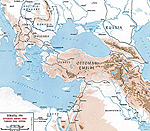
MAP OF THE OTTOMAN
EMPIRE 1914
Click map to enlarge
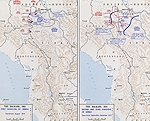
MAP OF THE SERBIAN
CAMPAIGN
August-December 1914
Click map to enlarge
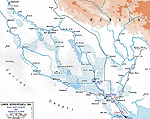
MAP OF MESOPOTAMIA
1914 -
ANGLO-INDIAN INVASION
Click map to enlarge
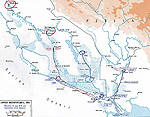
MAP OF MESOPOTAMIA -
January-July 1915
Click map to enlarge
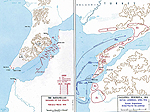
MAP OF THE DARDANELLES
AND
GALLIPOLI PENINSULA - Feb-Apr 1915
Click map to enlarge
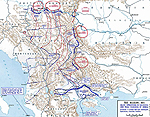
MAP OF SERBIA AND THE
SALONIKA EXPEDITION - October 7, 1915
Click map to enlarge
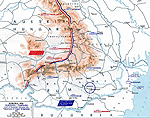
MAP OF THE ROMANIAN
CAMPAIGN -
Aug 27-Sep 18, 1916
Click map to enlarge
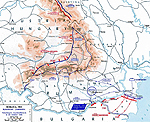
MAP OF THE ROMANIAN
CAMPAIGN -
Sep 19-Oct 25, 1916
Click map to enlarge
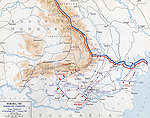
MAP OF THE ROMANIAN
CAMPAIGN -
Nov 26, 1916-Jan 7, 1917
Click map to enlarge
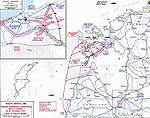
MAP OF THE BALTIC
ISLANDS - Oct 10-20, 1917
Click map to enlarge
The Western Front
Maps capturing the events on the
Western Front
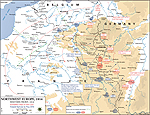
MAP OF THE WESTERN
FRONT 1914
Click map to enlarge
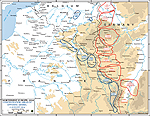
MAP OF NORTHWEST EUROPE: CONCENTRATION OF
OPPOSING ARMIES - August 2, 1914
Click map to enlarge
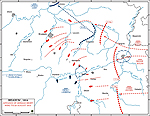
MAP OF BELGIUM:
ADVANCE OF
THE GERMAN RIGHT WING - August 20, 1914
Click map to enlarge
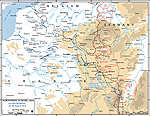
MAP OF THE ALLIED
RETREAT -
August 26-30, 1914
Click map to enlarge
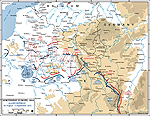
MAP OF THE ALLIED
RETREAT -
August 30-September 5, 1914
Click map to enlarge
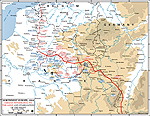
MAP OF THE WESTERN
FRONT -
Sept 30-Nov 11, 1914
Click map to enlarge
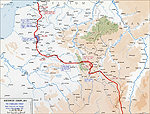
MAP OF THE WESTERN
FRONT 1915-1916
Click map to enlarge
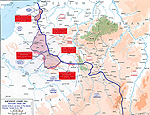
MAP OF THE WESTERN
FRONT 1918:
FIVE GERMAN OFFENSIVES
Click map to enlarge
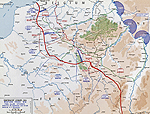
MAP OF THE WESTERN
FRONT: FINAL ALLIED OFFENSIVE - Sept 25-Nov 11, 1918
Click map to enlarge
The Eastern Front
Maps illustrating the battles and
events on the Eastern Front
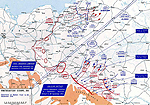
MAP OF THE EASTERN
FRONT 1914
Click map to enlarge
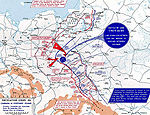
MAP OF THE EASTERN
FRONT:
CAMPAIGN IN SOUTHWEST POLAND -
Sept 28-Nov 1, 1914
Click map to enlarge
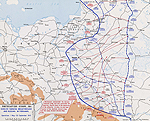
MAP OF THE EASTERN
FRONT: GERMAN BREAKTHROUGH
IN THE GORLICE-TARNOW AREA - May 1-Sept 30, 1915
Click map to enlarge
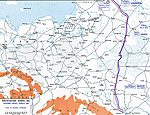
MAP OF THE EASTERN FRONT - March 1916
Click map to enlarge
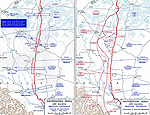
MAP OF THE EASTERN
FRONT: THE BRUSILOV OFFENSIVE - May-Sept 1916
Click map to enlarge
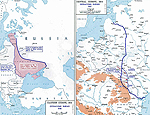
MAP OF THE EASTERN
FRONT 1917-8
Click map to enlarge
|
|
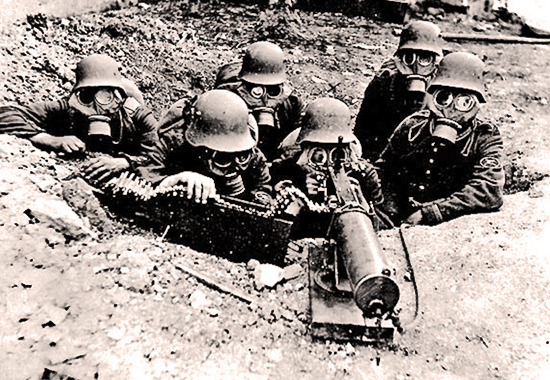
WORLD WAR ONE
1914 - 1918
The Sarajevo
Ripple Effect
Prior to
World War II, World War I was called
The Great War.
|
|
Over 65 million troops were engaged in the First World War, an
unprecedented number in 1914.
Consequently, the war also set a sad
record in wreaking havoc.
For the most part, the war was fought in
Europe; however, the Middle East, Africa, and Asia saw action as
well.
Who was involved in World War I?
In one way or another, almost everybody. Only the following countries managed to remain
neutral:
In Europe: Denmark, Holland,
Norway, Sweden, Switzerland, and Spain.
In the Americas: Argentina, Chile, Colombia, Mexico, and
Venezuela.
In Asia: Afghanistan and Persia.
In Africa: Abyssinia.
The main combatants of
WWI
The Central Powers fought against the Allies.
The Central Powers were Germany, Austria-Hungary, Turkey and
Bulgaria.
|
The Allies
were France, Great Britain,
Russia, Italy, Japan, United States, Romania, Serbia, Belgium,
Greece, Portugal, and Montenegro.
And here they are on a map.
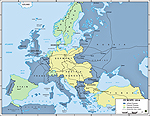
Europe 1914 - Allied, Central, and Neutral
Powers
What were the causes
of World War I?
Imperialistic expansion was backed by
a widespread net of military alliances. This extensive alliance
system was vulnerable, since nothing could happen without everyone's
being affected.
In simpler terms,
everybody made a promise to everybody to help them out in case they
got attacked. Now, all that needed to happen was someone had to
sneeze and everybody would be forced to take sides and fight whether
they wanted to or not.
In fact, someone did sneeze on June 28,
1914.
What started World War I?
On June 28, 1914, Serbian radical
Gavrilo Princip assassinated
Archduke Franz-Ferdinand of Austria
in Sarajevo. A month later, on July 28, 1914, Austria declared
war against Serbia and the rest of the globe followed
into World War I.
What ended World War I?
Bulgaria surrendered on
September 30, 1918; Turkey on October 30; and Austria-Hungary on
November 4, 1918.
On November 11, 1918, an armistice was signed
between the Allies and Germany. World War I was officially ended.
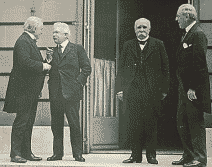
The peace conference was headed by the
"Big Four,"
David Lloyd George of Britain,
Georges Clemenceau of
France,
Vittorio Orlando of Italy, and
Woodrow Wilson of the United
States.
Who won World War I?
Who lost World War I?
The Allies were the victors of World
War I. The Central Powers lost World War I.
What were the
casualties of World War I?
During the four years of war, more
than 8.5 million soldiers were killed and 20 million wounded. A
total of 15,000,000 million deaths are estimated. Roughly 90% of all
Austrian mobilized forces became casualties.
Check the American war
casualties report
Treaties of World War
I
At the end of WWI, the Allies concluded the
Treaty
of Versailles with Germany and the
Treaty of Saint Germain with Austria.
And this is what everybody lost / gained
on the European map:
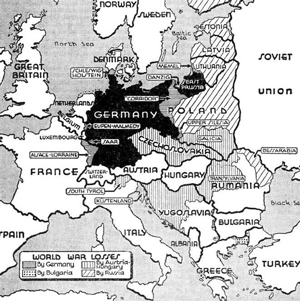
GERMANY BEFORE AND AFTER
THE TREATY OF VERSAILLES
Click to enlarge

Europe 1919:
the national boundary realignments
resulting from the First World War
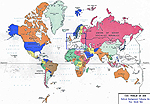
1919 World Map:
Political Realignment
Following the First World War
The United States and
World War I
The United States was determined to
remain neutral in European affairs. However, Germany�s
unrestricted submarine warfare
soon changed America�s opinion.
Furthermore, the
Zimmermann Telegram was intercepted by the United
States. This telegram, sent by
Arthur Zimmermann, revealed
Germany�s proposal of an alliance with Mexico against the United
States, and "an understanding on our [the German's] part that Mexico
is to reconquer the lost territory in Texas, New Mexico, and
Arizona.�
The Americans rubbed their eyes twice, read the telegram again,
and on April 6, 1917, the United States entered World War I.
Russia and
World War I
Simultaneously, the Russians had their hands full with World War I and the Russian Revolution of 1917
which turned everything in the country upside down.
And, without a
breather, the nation went on trying to survive the
Russian Civil War 1918-1920,
which turned out to have been a walk in the park compared to the
following chapter, the reign of mass murderer
Stalin from 1928-1953, whose colossal cruelty
was only interrupted by
World War II, during which
Russia lost 18 million of its people.
This is the incredibly devastating
background of the Russian people.
The Impact of World War I on
Humankind
The First World War ended four
dynastic empires in the country of
- Germany (
Hohenzollern Dynasty)
- Russia (
Romanov Dynasty)
- Austria-Hungary (
Habsburg Dynasty)
- Turkey (Ottoman
Dynasty)
For names of
the last emperors and their successors see
the
Lvov Trivia.
The war also
drastically reshaped the map of Europe, leaving
much of it in economic desperation.
All of
Germany's overseas colonies in China, in the
Pacific, and in Africa were taken over by the
Allies.
The Battles of World
War I
|
August
14 - September 5, 1914 |
Battle of the Frontiers |
|
|
|
|
August 20-22,
1914 |
Battle of
Morhange-Sarrebourg, part of the
Battle of the Frontiers |
|
|
|
|
August 26-30,
1914 |
Battle of Tannenberg
|
|
|
|
|
September 6-12,
1914 |
First Battle of the Marne
|
|
|
|
|
September 9-14,
1914 |
First Battle of the Masurian Lakes
|
|
|
|
|
October 12-November 11, 1914 |
First Battle of Ypres
|
|
|
|
|
November 11-December 6,
1914 |
Battle of Lodz |
|
|
|
|
February 7-22,
1915 |
Second Battle of the Masurian Lakes,
also called Winter Battle of the Masurian Lakes or
Winter
Battle of Masuria
|
|
|
|
|
February 19, 1915 -January 1916 |
Dardanelles Campaign, also
called Gallipoli Campaign |
|
|
|
|
April 22-May 25,
1915 |
Second Battle of Ypres |
|
|
|
|
June 23-July 7, 1915 |
First Battle of the Isonzo
|
|
|
|
|
July 18-August 3, 1915 |
Second Battle of the Isonzo |
|
|
|
|
September 25 - October 13, 1915 |
Battle of Loos
|
|
|
|
|
September 28, 1915 |
First Battle of Kut (Al-Kut)
|
|
|
|
|
October 18-November 3, 1915 |
Third Battle of the Isonzo
|
|
|
|
|
November 10-December 2,
1915 |
Fourth Battle of the Isonzo
|
|
|
|
|
February 21-December 15, 1916 |
Battle of Verdun
|
|
|
|
|
March 9-17,
1916 |
Fifth Battle of the Isonzo
|
|
|
|
|
May 31-June 1, 1916 |
Battle of Jutland, also called
Battle of the Skagerrak
|
|
|
|
|
July 1-November 13, 1916 |
First Battle of the Somme
|
|
|
|
|
August 6-17,
1916 |
Sixth Battle of the Isonzo |
|
|
|
|
September 14-17, 1916 |
Seventh Battle of the Isonzo |
|
|
|
|
October 10-12, 1916 |
Eighth Battle of the Isonzo |
|
|
|
|
November 1-4, 1916 |
Ninth Battle of the Isonzo |
|
|
|
|
February 22-23, 1917 |
Second Battle of Kut (Al-Kut)
|
|
|
|
|
March 26, 1917 |
First Battle of Gaza
|
|
|
|
|
April 19, 1917 |
Second Battle of Gaza |
|
|
|
|
May 12-June 8, 1917 |
Tenth Battle of the Isonzo |
|
|
|
|
July 31-November 6, 1917 |
Third Battle of Ypres, also
called the Battle of Passchendaele
|
|
|
|
|
August 19-September 12,
1917 |
Eleventh Battle of the Isonzo |
|
|
|
|
October 24-November 19,
1917 |
Battle of Caporetto, also called
Twelfth Battle of the Isonzo |
|
|
|
|
October 31-November 7, 1917 |
Third Battle of Gaza
|
|
|
|
|
November 20 - December 7, 1917 |
Battle of Cambrai
|
|
|
|
|
March 21-April 5, 1918 |
Second Battle of the Somme
also called
Battle of Saint-Quentin |
|
|
|
|
July 15-18, 1918 |
Second Battle of the Marne |
|
|
|
|
August
8 - 12, 1918 |
Battle of Amiens
|
|
|
|
|
September 19-21,
1918 |
Battle of Megiddo
|
|
|
|
|
September 26-November 11, 1918 |
Battles of the Meuse-Argonne
|
|
|
|
|
October 24-November 3, 1918 |
Battle of Vittorio Veneto |
|
|
|
Go here for the
Timelines of World War One
Armenian Genocide
During the war, the government of the
Ottoman Empire (Turkey) instigated the
Armenian Genocide. The genocide lasted from 1915 until
1923, caused 1.5 million deaths, and even to this day has gone
relatively unnoticed.
In fact, until this day the Armenian
Genocide remains a hot topic.
Some Armenians are of the opinion that Turkey can't really become
part of Europe until it acknowledges its part played in the Armenian
Genocide. Apparently, a certain Mr Hrant Dink was of this opinion as
well. He was a Turkish citizen of Armenian descent and was
assassinated in front of his office on January 19, 2007. Mr Dink was
a newspaper editor. The Turkish government brought 18 people to
trial for this assassination.
More from the
Washington Post...
Encyclopaedia Britannica tell us
The Armenians
are traditionally members of either the
Monophysite Armenian Apostolic (Orthodox)
church or the Armenian Catholic branch of
the Roman Catholic church.
The population of
Turkey are predominantly Muslims.
The Armenian Genocide proved inspirational for
Nut Adolf.
"Who, after all, speaks today of the
annihilation of the Armenians?"
More about
Hitler's quote from the
Armenian National
Institute.
World War I
Controversy
Which persons or nations were most
responsible for the war�s outbreak is debated.
World War I Trivia
Compared to previous wars,
technological advances heavily increased the casualties of World War
I. Tank, submarine, and airplane warfare was introduced as well as
the machine gun and poison gas.
World War I became infamous for its costly trench warfare at the
Western Front which stretched
from the North Sea to the Swiss border.
Here you can
Check the
costs of major US wars in comparison.
Read up on the brief but intense
war experience of one Stanley C. Griffin.
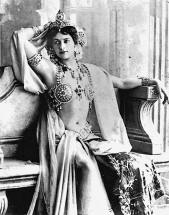
Here is more on
Mata Hari.
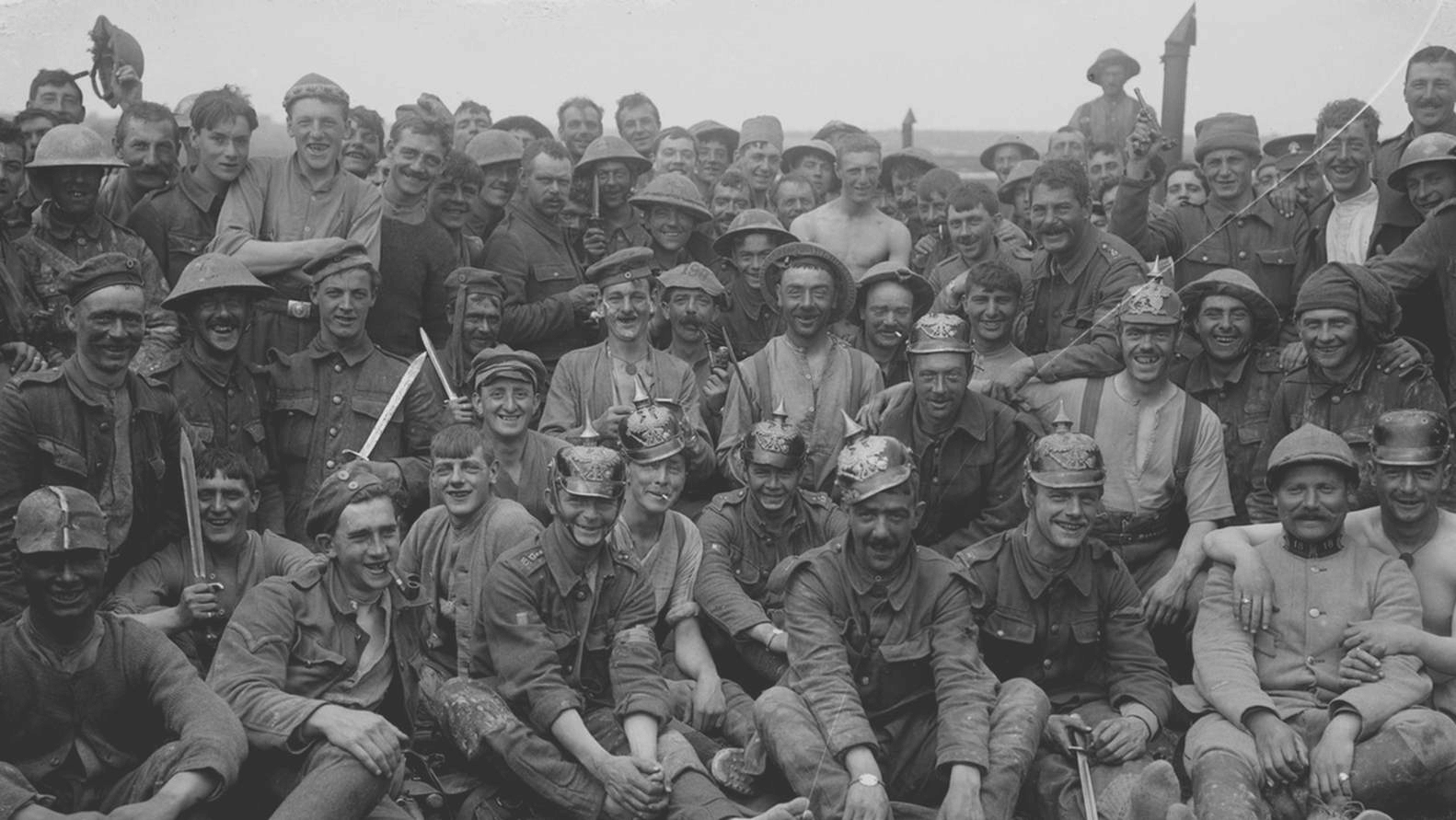
And here is a fabulous photograph from Zooniverse. If you are a
citizen historian and you can spare a moment, take part in this
impressive project,
Operation War Diary.
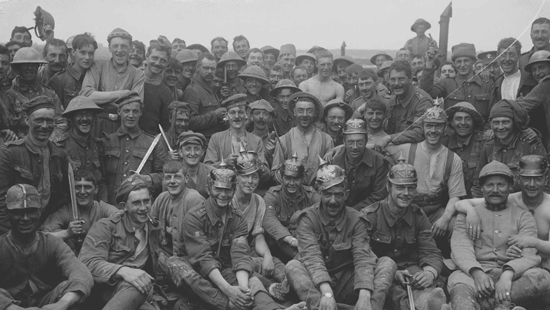
Happy World War I Soldiers
Click to enlarge
At eleven o'clock this morning came to an end
the cruelest and most terrible war that has ever scourged mankind. I
hope we may say that thus, this fateful morning, came to and end all
wars.
David Lloyd George, November 11, 1918
See also
American Timeline.
Maybe, see also
Human Rights
More History
|