|
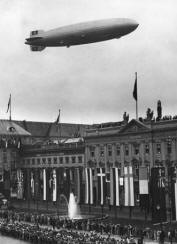
Airship Hindenburg March 1936-May
1937
This entry and photos are about the rigid airship
Hindenburg.
Go here for more about the person
 Paul von
Hindenburg.
Paul von
Hindenburg.
Back to the aircraft. It is also called
dirigible, from the French word diriger - to steer,
and sometimes it is called zeppelin, which is in honor of
Ferdinand Count of Zeppelin, its German inventor, who lived 1838
- 1917.
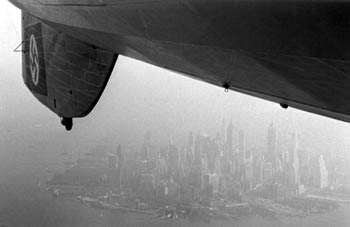
HINDENBURG OVER NEW YORK
The Hindenburg was something the Nazis were extremely proud of,
and rightly so. It
was the
first zeppelin with separate passenger decks and transported the
rich and famously rich for measly 1,200 Reichsmark in only 3
days from Frankfurt, Germany, to New York, USA. In comparison,
taking the ship could take up to two weeks. The Hindenburg was the
Concorde of the day, if you will.
What Is the Big Deal?
Two things:
a) The
Hindenburg was the largest rigid airship ever built, and
b) it
made one heck of a headline on May 6, 1937.
Measurements and
Details of the LZ 129 Hindenburg
Length: 804 foot / 245 m
Maximum speed: 84 miles / 135 km
Passenger capacity:
Lifting gas: 200,000 m³ hydrogen
Powered by: 4 Mercedes Benz Diesel Engines (total 4,200 HP)
Passenger capacity: 55
Number of crew members: around 60
First flight: March 4, 1936
Last flight: May 6, 1937
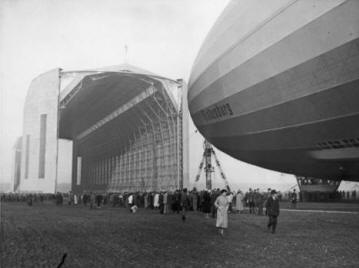
HINDENBURG - THE WORLD'S
BIGGEST AIRSHIP
The Hindenburg
Tragedy
On May 6, 1937, the Hindenburg arrived at Lakehurst, NJ, after its
trans-Atlantic crossing. It prepared to dock and all of a sudden the
aircraft burst into flames. 97 were aboard, 62 survived.
It would take 50 years before anybody
would be even thinking out loud about building a rigid airship again.
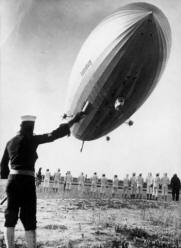
THE HINDENBURG SECONDS BEFORE THE
EXPLOSION
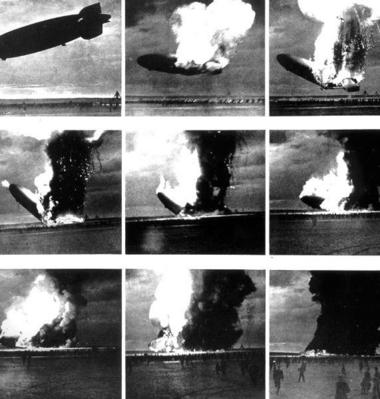
IT ONLY TOOK 30 SECONDS AND THE
ENTIRE AIRSHIP WAS GONE
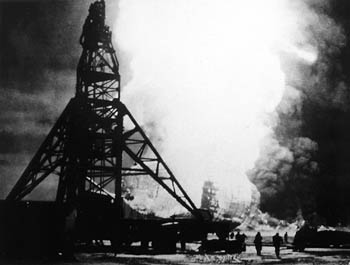
AIRCRAFT HINDENBURG IN FLAMES
Accident or Sabotage?
The official reason for the fire was that a discharge of atmospheric
electricity occurred close to a hydrogen gas leak. But there were
also rumors that it was an anti-Nazi act of sabotage. The movie
makers of The Hindenburg (1975) chose go with the sabotage
version because it just sells better.
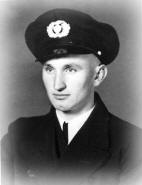
HINDENBURG MECHANIC ROBERT
MOSER
DIED IN THE TRAGEDY AGE 23
More History
|