PEOPLE IN HISTORY          WARS, BATTLES AND REVOLUTIONS          MAP ARCHIVE          FAMOUS SPEECHES


GOVERNMENTS IN HISTORY          HISTORIC DOCUMENTS          HISTORIC PLACES AND LOCATIONS          ALL-TIME RECORDS IN HISTORY


SOURCE TEXT          SOURCE DOCUMENTS          HISTORY DICTIONARY          TIMELINES          ARCHAEOLOGICAL RECORDS


HOME   -   HISTORY NOTES   -   GEORGY GAPON


GEORGY GAPON 1870 - 1906
GEORGY GAPON
1870 - 1906


Leading Russia Into Revolution

Gapon was an intelligent priest who knew how to deliver a captivating speech.

Equipped with good looks, charisma, and excellent organizational talent, he also gained a reputation as someone who stood up on behalf of the oppressed and less fortunate.

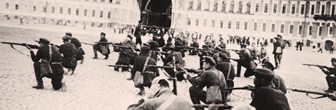
Gapon organized and led a mass demonstration on a day that became known as Bloody Sunday.

This event ignited the  Russian Revolution of 1905.


Gapon's Puzzling Profile

Father Gapon can also be described as having been a young socialist who sent mixed messages regarding his revolutionary alliances. It almost looks like he was ready and confident enough to blaze his own trail through the mess of the Russian unrests.

It is for this reason that some critics questioned his motives and saw his social acts of goodness simply as a way to create a following.

It is also for this reason that Gapon ended up dead in 1906. He put himself on the fence and equally alienated both sides, the czarist regime and the revolutionaries.


Georgy Gapon's Family

Gapon was married to Vera and had two children. After four years of marriage his wife suddenly fell ill and died, leaving Gapon gravely devastated.


Gapon Before Bloody Sunday

Gapon was born in Beliki, or Beliaki, a small village in Ukraine, on February 5, 1870. His parents were peasants and devout.

Gapon went through primary school, then graduated from the Lower Ecclesiastical School in Poltava, and attended the Poltava seminary after that. He briefly worked as a statistician for the local council, the zemstvo, in order to finance his studies. Gapon went on to serve as priest in a cemetery chapel.

From 1898 until 1903, Gapon studied at the Theological Academy in St Petersburg, after which he was employed as a prison chaplain.

During his student years in St Petersburg, Gapon kept extending the helping hand for people in distress. Soon, the Czarina Alexandra Feodorovna heard of his good deeds and recommended him to leading politicians.

Starting in 1902, Gapon accepted 100 rubles per month from Sergey Zubatov who paid this handsome sum in his capacity as chief of the czar's secret police, also called the Okhrana. What was Gapon paid for? The objective was to boost Czar Nicholas' popularity among the masses.

To this effect, Gapon founded the Assembly of the Russian Factory and Mill Workers of the City of St. Petersburg. The assembly organized social events and the like, all in order to smooth out socialist ambitions and to keep revolutionary activities in check. Unbeknown to his employers, Gapon also had a political agenda of his own.


Gapon and the Bloody Sunday of 1905

Included are timeline events that led up to the massacre on January 22, 1905.


Monday, January 16, 1905 (January 3, 1905 -
Old Style)
Workers at a plant in Putilov, Ukraine, went on strike. Gapon supported the employees. The strike quickly spread to other factories.


Wednesday, January 18, 1905 (January 5, 1905 -
Old Style)
Gapon met with the city governor and outlined his plans of a peaceful march in
 St Petersburg that would end in front of the Czar's residence and present him with a petition.


Saturday, January 21, 1905 (January 8, 1905 -
Old Style)
In the evening, Josif Vladimirovich Gessen, a prominent lawyer and political adviser, visited Sergey Yulyevich Witte, chairman of the Council of Ministers aka Prime Minister.

Gessen pointed out that the general spirit of the citizens was rather agitated and that it would be prudent not to let the army interfere with tomorrow's march.

Also that evening the Ministry of Internal Affairs received a letter from Gapon, written in a polite tone, asking to let him present his petition to the Czar tomorrow at 2 p.m.


Bloody Sunday, January 22, 1905
(January 9, 1905 -
Old Style)

Fact 1 - Troops had been shipped in to support the local units.

Fact 2 - Gapon was not granted an appointment to present his petition to Czar Nicholas. In fact, the Czar was out of town.


The events unfold - The demonstrators marched direction city center. The police ordered the crowd to disperse. The marchers didn't disperse. The troops were told to open fire. Several hundred people were wounded, Gapon being one of them. About 130 people were killed.

See more under the  Russian Revolution of 1905.


Gapon after Bloody Sunday

After the bloodbath, Gapon fled the country and met with other Russian revolutionary émigrés. He was very outspoken against the czarist regime and joined the Socialist Revolutionary Party.

Gapon returned to Russia, contacted the authorities and officially regretted his role in the events that led up and included Bloody Sunday. His revolutionary comrades were confused.

The confusion turned eye opener when Gapon decided to collaborate once more with the Czar's secret police. This time his assigned goal was to dissolve the anti-imperialistic movement he had been a part of.

However, Prime Minister Witte didn't trust Gapon and arranged to have him escorted out of the country via Verzhbolovo, which is in today's Lithuania. Gapon left Russia and promised to stay gone.

Round about November 1905, Gapon came back. Again he agreed to assist homeland security in their fight against insurgents.

This time the revolutionaries had him hung.



Previous Page
Georges Clemenceau

Back to
Main Page


Back to
History Notes

Next Page
Gerald R. Ford


Video Clip:
History of the Russian Revolution of 1917

... or История Русской Революции 1917, if you speak Russian. Setting the mood for a study of the Russian Revolution.


Russian Civil Wars in a Nutshell

The Russian Revolution of 1905

The Russian Revolution of 1917

The Russian Civil War 1917-1920


Related Timelines

Timeline of World War I - 1914

Timeline of World War I - 1915

Timeline of World War I - 1916

Timeline of World War I - 1917

Timeline of World War I - 1918

Timeline of the Russian Revolution of 1905

Timeline of the Russian Revolution of 1917

Timeline of the Russian Revolution and
      Major Wars between 1800 and 2000

Timeline of the Russian Civil War 1917

Timeline of the Russian Civil War 1918

Timeline of the Russian Civil War 1919

Timeline of the Russian Civil War 1920


Faces of the Russian Revolution

Catherine Breshkovsky

Georgy Gapon

Aleksandr Fyodorovich Kerensky

Aleksandr V. Kolchak

Lavr G. Kornilov

Vladimir Ilyich Lenin

Anatoly Vasilyevich Lunacharsky

Georgy Lvov

Aleksey I. Rykov

Joseph Stalin

Leon Trotsky


The Former Russia

Czar Nicholas II

Rasputin

The Romanov Dynasty

About St. Petersburg


The Last Tsars of the Russian Empire

1762-1796 Catherine II the Great

1796-1801 
Paul I (Son of Catherine II the Great)

1801-1825 Alexander I
(Son of Paul I)

1825-1855  Nicholas I
(Son of Paul I)

1855-1881 Alexander II
(Son of Nicholas I)

1881-1894  Alexander III
(Son of Alexander II)

1894-1917
Nicholas II (Son of Alexander III)


About Communism

What is Communism?

What is the difference between Marxism and
      Leninism?

What is the difference between Marxism,
      Leninism, and Stalinism?

What is Anarchism?

What is the difference between Communism
      and Socialism?

About Karl Marx

About Friedrich Engels

About Rosa Luxemburg

About Fidel Castro

About Mao Zedong


Related Documents

Manifesto of the Communist Party, 1848

August Manifesto, 1905

October Manifesto, 1905

Vyborg Manifesto, 1906

Order No. 1, 1917


Related Events

Russo-Japanese War 1904-1905

World War I

World War II


Glossary

All-Russian Soviet of Workers' and Soldiers'
      Deputies

Black Army

Bolsheviks

Bourgeoisie

Cheka

Comintern

Communist Party of the Soviet Union

Comrade

Dictatorship of the Proletariat

Dual Power

Duma

Green Army

Kadets

Mensheviks

New Economic Policy (NEP)

Okhrana

Old Style / New Style Dates

Petrograd

Petrograd Soviet of Workers' and Soldiers'
      Deputies

Politburo

Proletariat

Provisional Government

Red Terror

Russian Communist Party

Russian Social-Democratic Workers' Party

Socialist Revolutionary Party

Soviet

St. Petersburg

The Black Hundreds

The Red Scare

War Communism

Winter Palace

Women in the Russian Revolution

Zemstvos


Russian Civil War Maps

World Map 1910
World Map 1910


Europe 1910
Europe 1910


Map of Europe 1914
1914 Europe:
Allied, Central, and Neutral Powers


Russian Civil War 1917-1920
Map of the Russian Civil War 1917-1920


Map of WWI: Baltic Islands - Oct 10-20, 1917
1917, Oct 10-20 - WWI:
Baltic Islands


Map of WWI: Eastern Front 1917-8
 1917-8 WWI: Eastern Front
Treaty of Brest-Litovsk and Kerensky's Offensive


World Map - Population Density 1918
1918 World Map
Population Density


World War One Losses
1919 Europe:
World War One Losses


Map of Europe in 1919: the national boundary realignments resulting from the First World War
1919 Europe: the national boundary realignments resulting from the First World War


Russian Civil War 1919 - Farthest Advance of the Anti-Bolsheviks Forces
Russian Civil War 1919:
Farthest Advance of the Anti-Bolshevik Armies


Map of the World in 1919: Political Realignment Following the First World War
1919 World Map:
Political Realignment
Following the First World War


Speech Archive

Browse famous speeches in history:

Speeches By Date

Speeches By Speaker

Speeches By Topic


Picture Archive

Find pictures and photos of historic people and events.

Picture Archive A - C

Picture Archive D - M

Picture Archive N - Z


Attila the Hun

Attila King of the Huns

The greatest of all Barbarian rulers, Attila kicked rear on a large scale.

Attila short biography

Map of Attila's empire

Battle of the Catalaunian Plains

Who were the Huns?


HISTORY

Mexican Revolution

The Mexican Revolution


Check out the
Timelines of the Mexican Revolution

Mexico's struggle to switch from dictatorship to constitutional republic translated into ten messy years of skirmishing in Mexican history.

More from the Mexican Revolution:

Pancho Villa

Emiliano Zapata

Francisco I. Madero

Causes of the Mexican Revolution

Women in the Mexican Revolution

Summary of the Mexican Revolution


Greco-Persian Wars

Also called the Persian Wars, the Greco-Persian Wars were fought for almost half a century from 492 BC - 449 BC. Greece won against enormous odds. Here is more:

Battle of Marathon
Battle of Thermopylae
Battle of Salamis
Battle of Plataea


EK Books

Knowledge that sticks. Print or download. Global shipping. 

Reseller


Music in History

Music that played a role in history.

Learn More


History Movies


What's fact, what's fiction?

Learn More


Historical Castles and Palaces


The French Revolution - Its Causes. Its Victims. Its Effects.


People in History

Historic People - Main

People in History A - C

People in History D - F

People in History G - I

People in History J - M

People in History N - Q

People in History R - Z

Royal Families

Tribes & Peoples

Explorers, Scientists & Inventors

Musicians, Painters & Artists

Poets, Writers & Philosophers

First Ladies

Native Americans & The Wild West

Troublemakers

Historians

Archaeologists


Wars, Battles & Revolutions

Wars & Revolutions A

Wars & Revolutions B - E

Wars & Revolutions F - G

Wars & Revolutions H - J

Wars & Revolutions K - O

Wars & Revolutions P - R

Wars & Revolutions S - Z

Wars & Revolutions Chronological

Battles A - C

Battles D - L

Battles M - P

Battles Q - Z

Battles Ancient Times - 1499

Battles 1500 - 1799

Battles 1800 - Today


Miscellaneous

History Dictionary A - F

History Dictionary G - Z

Source Text - By Title

Source Text - By Author

Historic Documents A - Z

Historic Documents Chronological

History News

Research

Downloads


Bored?

Kids & History

Browse

About Us

Write Me


Sitemaps

Sitemap 01   Sitemap 02   Sitemap 03    Sitemap 04   Sitemap 05   Sitemap 06  
Sitemap 07   Sitemap 08   Sitemap 09    Sitemap 10   Sitemap 11   Sitemap 12
Sitemap 13   Sitemap 14   Sitemap 15    Sitemap 16   Sitemap 17   Sitemap 18
Sitemap 19   Sitemap 20   Sitemap 21    Sitemap 22   Sitemap 23


Site Search


HISTORY IN A NUTSHELL


© 2010 Emerson Kent