|
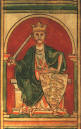
Richard I the Lion-Heart
1157-1199
|
|
Richard Lionheart was Richard I, king
of England from 1189 until 1199.
A Crusader by heart, Richard and King
Philip Augustus of France kicked butt during the
 Third Crusade, which took place
1189-1192.
Third Crusade, which took place
1189-1192.
Besides being Richard I King of England,
he was also the Duke of Aquitaine, Poitiers, and Normandy, and
Count of Anjou. |
Richard
the Lion-Heart's Strong Points
Richard's prowess
and tremendous energy became legendary. He was an excellent soldier.
Richard's Weak Points
Richard was so
excited about going on Crusade that he completely forgot to appoint
a deputy ruler who could keep things together while he was gone. Therefore, his weaknesses were
absence of foresight and sense of responsibility.
He also could be
hot-tempered and capable of great cruelty.
Richard's Achievements
His successes, on the other hand, were that he managed to accumulate
the money to raise a formidable naval fleet and an army, with which
he departed for the Holy Land.
Even though he was not able to
re-capture Jerusalem, he made a truce for three years with
Saladin that gave Christian pilgrims
free access to the holy places.
On the way back from the Holy Land, he was captured in Vienna. His
country had to pay an enormous ransom, but he eventually recovered
all his lands and power he once held.
Richard's Successor
1199-1204 - On the death of King Richard, his brother
John claims
and makes himself master of England and Normandy and the other
large continental possessions of the early Plantagenet princes.
Philip Augustus asserts the cause of
Prince Arthur, John's nephew, against him. Arthur is murdered, but
the French king continues the war against John, and conquers from
him Normandy, Brittany, Anjou, Maine, Touraine, and Poitiers.
Richard's Family
Richard's mother was the famous
Eleanor of Aquitaine.
His father was Henry II.
And here is the map of Richard's crusade
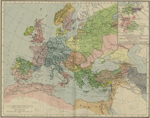
MAP OF EUROPE 1190
Click map to enlarge
See also the chart
Governments in History.
More History
|